NT Department of Health Datasets Added to the Atlas
New Datasets
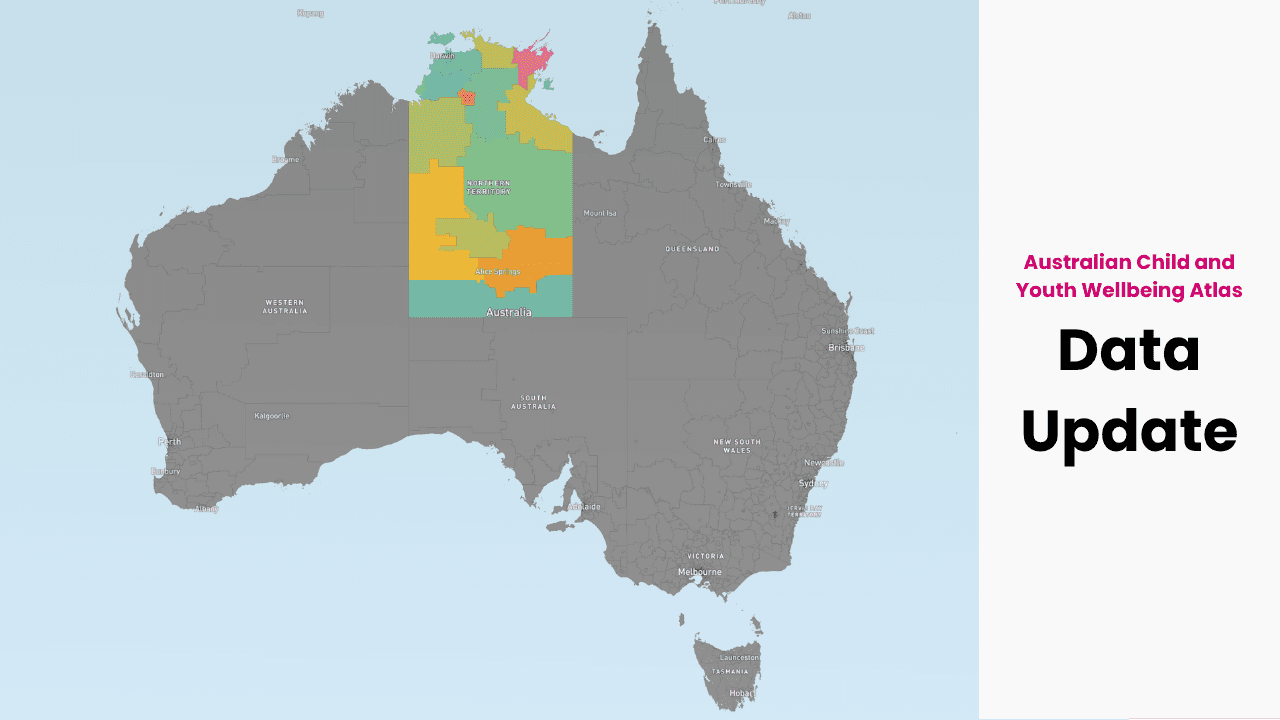
Northern Territory Department of Health data have been added to the Australian Child and Youth Wellbeing Atlas under the 'Healthy' theme. Datasets include:
Northern Territory Perinatal Data Collection
This dataset provides indicators on breastfeeding outcomes at hospital discharge for infants born in the Northern Territory. The data relate to singleton term live births occurring in hospital where the baby was discharged with the mother, excluding babies admitted to a Special Care Nursery, and including births to NT resident mothers only. Indicators report exclusive breastfeeding, partial breastfeeding (breastfeeding with at least one formula feed), and no breastfeeding at discharge. These data are listed within the 'health at birth' sub-theme, the indicator is named 'infant feeding at discharge'.
Emergency Department Data Collection
These indicators are derived by the Atlas from episode-level emergency department (ED) presentation records provided by the Northern Territory Department of Health Emergency Department Data Collection, which captures presentations to all public hospital emergency departments in the Northern Territory. Indicators include presentations for a range of health conditions such as injury, mental health, alcohol-related harm, respiratory disease, and total ED presentations, as well as presentations by triage category.
Hospital Inpatient Admissions Data
These indicators are derived by the Atlas from episode-level records provided by the Northern Territory Department of Health Hospital Admitted Patient Data (Inpatient Activity – Admissions collection), which records hospital admission episodes in Northern Territory public hospitals. Indicators include hospitalisations for a range of health conditions such as cardiovascular disease, cancer, assault-related injuries, and vaccine-preventable diseases, as well as total hospitalisations.
Data cover the period 2006–2024 and are reported at SA3, SA4, and State/Territory levels within the Northern Territory.
Click here for a list of all sub-themes and indicators within the theme of 'Healthy'.
Click the button below to explore the newly added datasets in the Atlas platform. Open the data filters to navigate to other indicators and datasets.