Diversity and Inclusion
Trans and Gender-Diverse Young People
In the Atlas, data has not been disaggregated by gender identity or intersex status. It only provides a breakdown based on the binary categories of female and male. We are profoundly aware that many young people identify with a wide spectrum of gender-diverse identities, which go beyond the binary concept of female and male.
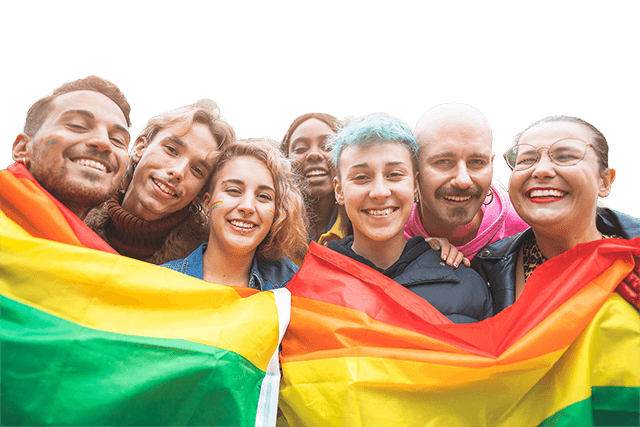
We are profoundly aware that many young people identify with a wide spectrum of gender-diverse identities, which go beyond the binary concept of female and male. These identities include terms such as non-binary, gender fluid, gender questioning, agender, and others that best represent their gender identity.
Some transgender young people may identify as female or male but have sex characteristics or experiences unlike their peers of those genders after transitioning medically and/or socially. Some young people do not fit within the socially constructed sex binary of ‘male’ and ‘female’, both at birth and throughout life. Many of these young people identify as intersex.¹
The process of disaggregating data by gender identities and intersex status presents several challenges. Often, existing data collection methods do not yet capture this information, and even when they do, privacy concerns may necessitate that data is suppressed due to small sample sizes or data quality issues.
An increasing body of research into wellbeing outcomes of gender-diverse people has revealed that gender-diverse children and youth face notably more challenges across multiple aspects of wellbeing, performing comparatively worse than other vulnerable groups across specific measures.² Latest findings of the National Survey of LGBTQIA+ Youth Voice in Australia show that only 1 in 3 LGBTQIA+ young people felt their experiences and opinions are understood, valued and listened to by those around them - 6% of LGBTQIA+ young people felt the government does a good job of understanding and listening.³
The ACYWA project is committed to working on finding ways to overcome these obstacles. Our objective is to directly engage with trans, gender-diverse, and intersex youth to understand their preferences regarding how their data should be represented.
¹InterAction [Internet]. What is intersex?. [cited 2025 May 30]. Available from: https://interaction.org.au/18106/what-is-intersex/
²Commissioner for Children and Young People WA 2023. The wellbeing of trans and gender diverse youth. [Internet]. [cited 2023 Oct 10]. Available from: https://www.ccyp.wa.gov.au/our-work/key-initiatives/the-wellbeing-of-trans-and-gender-diverse-youth/
³ Minus18 Foundation 2025. Queer Youth Now: The national survey of LGBTQIA+ youth voice in Australia. [Internet]. [Cited 2025 September 22] www.minus18.org.au/national-survey-2025